On the Edge of Spring

It’s the middle of March, and the past couple of days here in the Seattle area have been mild and sunlit with clear skies. This is when those of us who live here know spring is on the way. It’s not that this weather will endure; we will have many more days of gray skies and drizzle before spring fully takes hold, and those days may spill well into summer. But days like this tell us that spring is coming, that the trees and flowers are budding, that the darkness of winter is on the way out.

When days like this happen, my spouse and I like to do what we call Balcony Afternoons. We have a balcony directly off our bedroom, large enough to accommodate us and some lounge chairs and a small table and our pets (as well as a feeder for the hummingbirds). Our house is at the south end of a lake, and while our neighborhood is decidedly humanized and suburban, we can see the lake and the hills that ring it and the birds that float and feed on it and old growth trees that haven’t been torn out to make space for the humans, as well as the soaring sky. These days are brilliant and precious, and we want to experience them and cherish them. We go outside for a couple of hours with a bottle of wine and some snacks, and just enjoy the time outside.
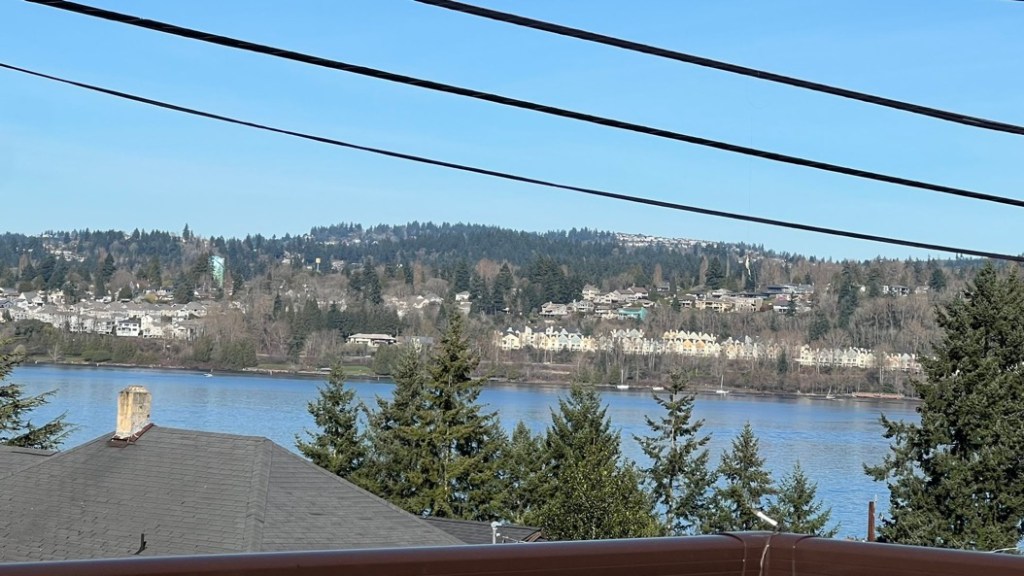
We’ve lived in this house for seven years (as of the end of this month). It was always intended as not just a home but a refuge, and for more than half the time we’ve lived here it’s been a near-constant sanctuary from the pandemic as well as our home. We chose this house because of the lake and trees and birds and balcony, among many other reasons, and we cherish those things each day but especially on days like this.

The past several months have been…a lot. We’ve had individual and family struggles, including death and injury and illness and turmoil. Six months ago, I quit a job I’d held for nearly a decade, after years of overwork and burnout and unmanageable expectations, and it was less to go to something new than it was to simply end the ongoing damage. I’m still not recovered from that and I don’t know when I will be. I’m still figuring out who I am outside of that job and that workplace and whether I’ll ever return to a lot of things I love to do (which, not gonna lie, included things I did in that job). But on this edge of spring day, I can feel both respite and hope as I sink into the view and the warmth and all the signs of the world cycling back to spring for this year.

I’m a native of the Pacific NW, and I’ve lived here the majority of my life. I know the rhythm of the seasons here and I expect the darkness and damp of autumn and winter. To be honest, I cherish autumn here; the first part of it remains lovely and dry more often than not, with pleasantly crisp days and autumn colors and the pleasures of coziness, and then comes Spooky Season, which I especially appreciate as an avowed goth. I love autumn twilight and bare branches and mist and the need for extra light, as we move towards the prime gothy holiday; and even after All Hallow’s Eve, we move into the defiant sparkle and hearty pleasures of the end of year holidays, which help stave off the worst of the dark and damp as we approach the winter solstice. But I won’t lie: the time after those end of year holidays and through January is rough, and eventually even I have had enough of the dark and damp.

That’s why these days on the edge of spring are so precious: they are the end of the rough dark times and a sign that brighter times are ahead. I will luxuriate in the brighter, warmer days of spring, in the return of spring/summer migrants and the blooming flowers and the phenomenal greens that we have in summer to complement the evergreens we’re fortunate to have year-round and the opportunity to sit on my balcony and revel in the lake and sky and trees. Eventually it will get hot (which didn’t used to happen, but our climate is broken so it’s always hot in summer now), and things will get dry and brown, and we’ll probably have fires and smoke that make summer difficult to fully savor. When autumn comes around again, I’ll be more than ready for it. But right now, we are in the part of the cycle where the dark and cold starts to retreat and the brightness returns, and right now I need that.
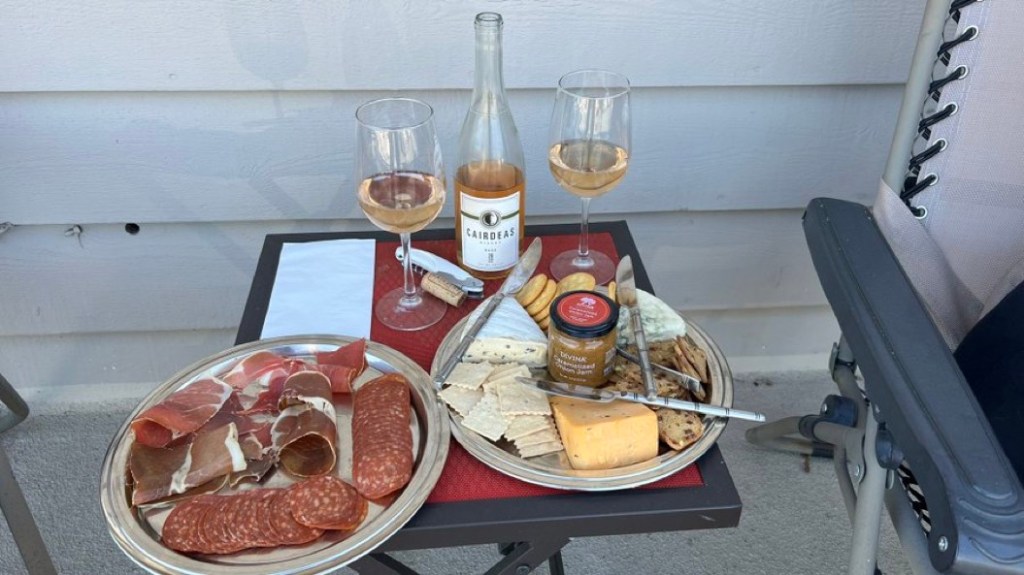
Today we had a rosé from a favorite winery in the central part of the state and some delightful cheeses and a luscious onion jam (and charcuterie for my spouse). One of our neighbors ran his power washer for a couple of hours; when he finally shut it off, the absence of its noise highlighted the pleasant background noise of our neighborhood. A Bewick’s wren sang his burbling running-brook song, because it’s that season, and the chickadees and Steller’s jays called at each other. A pair of adult crows billed and groomed atop a tree down the street, while the adolescent crows fluttered around the neighborhood in a gang, yelling and playing. Nothing unusual for this time of year…but special and beautiful all the same, every time. And I’m grateful we have more of this to come as spring fully expands.

A practical guide for post-election anxiety

Originally published November 10, 2016

A group I hang out in online was having discussions this morning about how they’re dealing with the results of the U.S. Presidential election. There’s still a lot of grief and anger. There’s also a lot of people dealing with major anxiety for the first time and it’s causing them to spiral into obsessive worst-case worrying in a way that’s detrimental.

I am, as I’ve said before, an expert-level Anxious Person. Spiraling, obsessive thoughts, extrapolation of worst-case scenarios, and intrusive worrying have been unwanted companions since adolescence. (On election night I spent about five hours in a slo-mo panic attack; it only became inconvenient when the jackhammering of my heart meant I couldn’t sleep. That’s how familiar anxiety is for me.) I’ve expended a lot of energy arranging my life and behaviors to mitigate chronic anxiety. And that means that in the face of an event like this and the fear of the future that’s come with it, I actually have a set of tools that folks who haven’t spent so much of their lives anxious might not have. I told the people in my group that I would write this to help them, and I hope it can help others too.

I want to emphasize that this is not “don’t be scared or anxious” fatuous cheerleading. Being scared and anxious is absolutely understandable right now. No one is going to stop being scared or anxious because somebody else tells them to. One of the things dealing with chronic anxiety has taught me is that lack of control tends to make even very mild anxiety worse, and holy shit do we not have control over any of this. People have every reason to be scared and freaked out.

So taking control of what I can is how I help mitigate anxiety. The stuff below is a framework that can allow you to get a grip on the sources of anxiety and see what you can act on. It’s flexible and malleable so you can fit it to your needs. Using it consistently is how I’ve managed to stay functional more often than not, and I’m hopeful that it can help serve that purpose for others.

–Outline the things you’re anxious about. Anxiety is not reasonable. It’s a reaction to the perception of threat, and it can make you incapable of grasping exactly what has caused weasels to take over your brain. Creating a concrete accounting of it helps you see it all.

–Rank your concerns from most immediate/most likely/most practical to least. This will vary for everyone, but Maslow’s hierachy of needs can be a decent guideline. Right now, for a lot of people, the most likely are physical safety, finances, and medical care/insurance coverage. Nuclear war and complete societal collapse are not unreasonable fears at all, but they’re much further out on the scale of likelihood than things that impact your ability to live and survive day to day. Don’t make value judgments about your concerns, don’t get caught up in whether it’s “silly” to be scared about something; that’s a way to get yourself spiraling. Using criteria of immediacy/likelihood/practicality removes the value judgments and makes it easier to focus.

Note that this also includes care for mental health issues. If the election result has brought you to a place of crisis, of self-harm (including relapse of addiction or eating disorders) or suicide, that absolutely fits here and should be a priority, because it comes under safety. You deserve life and care and you deserve to get help. 

–Figure out plans for addressing the immediate/likely/practical concerns. This is where I was at on Tuesday night. My biggest immediate concerns are losing our income and our health insurance, so I was making lists of things we need to change about how we use our money, when/whether to look at new employment options, and setting aside things that carry too much financial risk. For others this might mean things such as self-defense classes or weapons training; getting medical procedures done before 1/20/2017; finding new sources of income or setting up new financial plans; sorting out new housing arrangements if where you are isn’t safe. Again, it’ll depend on everyone’s individual circumstances. But knowing that you can do things to address those immediate concerns can quiet the overwhelming anxiety.

–Look at what you can do for the longer-term concerns. A lot of this will be in the realm of preparatory stuff–you might not ever need it, but it’s good to have it if you do need it. Set up and organize all the legal documents you might need (and everyone should do this but it’s particularly important if you’re in a same-sex marriage, trans, or an immigrant). Get together all your medical documentation and outline what you’ll need for treatment/care for your medical conditions (including mental health). Organize emergency supplies, whether that’s a 3-day kit (recommended by most disaster planning agencies) or long-term “doomsday prepper” stocks against a possible extended calamity. Take steps to protect the security of your home, loved ones, and online activity. All of this is stuff that’s a good to do even if nothing dire is happening, but it can be particularly helpful when you’re in the throes of a specific anxiety.

–Volunteer or take civic action, if it’s within your capacity. Being directly involved in working on something that matters to you can be really helpful if you’re feeling scared or anxious about it, and volunteering has demonstrated benefits for the people who engage in it. Plus it can make a difference to the cause you invest your effort in, which can improve the circumstances that are making you anxious. Even if it’s something informal, such as providing escort for friends who might be at risk in the current climate or watching out for the safety of immigrant neighbors, giving your effort to help others will benefit both you and them.

–Giving money is always worthwhile (I say this as someone currently employed by a donation-driven non-profit), but it’s not always realistic. Give money if you can, if you want to, if it won’t disadvantage you to do so. Don’t fall into further anxiety if financial support of a cause isn’t feasible for you.

–Let yourself be joyful. It can be really, really easy to get trapped inside your fear and anxiety in a scary, uncertain time. You are allowed to have fun and be happy and do enjoyable things, and doing so will make you more effective when you have to deal with the hard stuff. Again, the specifics of this will vary for everyone depending on their circumstances. Whatever they are, they should be things that replenish you and don’t leave you feeling bad or regretful afterwards. 

Again, all of this is just a framework; it’s just tools. Everyone’s circumstances will vary, and not everything here will be practical or realistic for every person or situation. I know there’s no way at all that I can possibly have covered every circumstance (and that a lot of what I’ve said is definitely informed by my particular status and privilege). But I hope that putting the tools out there can be useful for at least a few people. I want you all to be as safe, secure, and happy as you can when we’re facing this looming horrorshow. I hope I can contribute a tiny bit to you achieving it.